Key Takeaways
- Assess your household’s hot water needs for the correct size and type.
- Choose models with high energy efficiency to lower ongoing costs.
- Check fuel types available in your area for practicality and savings.
- Take advantage of tax credits and rebates for qualifying heaters.
Choosing the right water heater can significantly impact your home’s comfort, energy consumption, and long-term utility costs. Whether you’re replacing an old unit or outfitting a new home, understanding the benefits and limitations of each option is key to making the best decision. With professional water heater service, you can ensure that your investment will be properly installed and maintained for optimal efficiency.
From calculating daily demand to exploring energy-efficient technologies, selecting the ideal heater also requires knowledge about fuel types, government incentives, and local resources. For homeowners in need of expert assistance, a trained specialist can help you select a water heater that meets your needs and ensures ongoing reliability.
Before settling on a solution, consider factors such as the number of people in your home, your location’s climate, and the available space for installation. If you encounter complex plumbing issues during your upgrade or installation, it’s helpful to consult a local expert. For those residing in the area, a licensed plumber in Lesslie,SCcan provide valuable insight and support throughout the process.
Understanding Your Household’s Hot Water Needs
Estimate your home’s daily hot water consumption to ensure an accurate starting point—factor in the number of occupants, bathing routines, appliance usage, and peak-hour demand. As a general rule, smaller households can manage with lower-capacity heaters. At the same time, larger families—even those with staggered shower times—typically require a higher output to prevent running out during periods of high demand. The Department of Energy provides a helpful guide for estimating peak demand to ensure you don’t under- or oversize your heater.
Types of Water Heaters
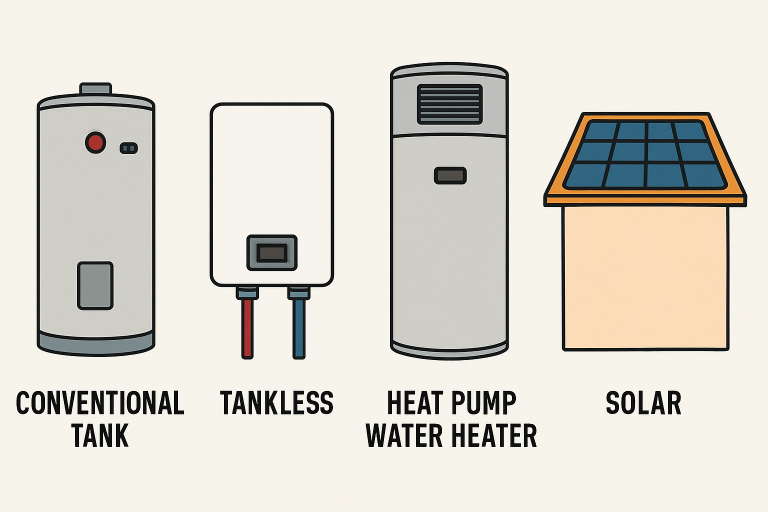
Modern households have several types of water heaters to consider, depending on preferences and home conditions:
- Conventional Storage Water Heaters:These store a reservoir of preheated water, offering a reliable supply for homes with regular usage patterns. However, there’s a trade-off in standby heat loss, which may increase energy use.
- Tankless (On-Demand) Water Heaters: These systems only heat water when required, delivering energy savings and space efficiency. While suitable for small to medium-sized homes, they may struggle with simultaneous high-flow demands, such as multiple showers running at once.
- Heat Pump Water Heaters: Known for high energy efficiency, these pull warmth from the surrounding air or ground. They have a higher upfront cost and require suitable installation space and a specific ambient temperature range.
- Solar Water Heaters: Utilizing solar panels, these can significantly reduce energy bills and environmental impact, but are best suited to sunny regions and involve higher installation costs.
Energy Efficiency Considerations
The efficiency of your water heater has a direct impact on your monthly bills and your home’s environmental footprint. Heaters with the ENERGY STAR® label adhere to high standards for energy use. Key metrics to compare include:
- Energy Factor (EF): A traditional measure showing a unit’s energy conversion efficiency—higher is better.
- Uniform Energy Factor (UEF): A newer, more precise metric, making it easier to compare different types and brands of heaters.
As technologies evolve, Consumer Reportsrecommends considering both lifetime savings and the initial investment, especially for high-efficiency models like heat pumps and solar heaters.
Fuel Type and Availability
The performance and operating cost of your water heater depend heavily on fuel type. Evaluate what’s already available in your home and the cost of running each type in your area:
- Electricity: Simple installation and wide availability, but running costs can be high in certain regions.
- Natural Gas: Lower operating expenses, but requires both a gas line and ventilation.
- Propane: An alternative in areas without natural gas, yet typically higher in cost.
- Solar Energy: Minimal operational cost post-installation and ideal for sun-rich climates.
Consult your utility provider or local government for up-to-date information on fuel options and average rates before committing.
Size and Capacity
A water heater that’s too small will fail during periods of high demand, while an oversized model wastes energy. For storage tank systems, consider the First Hour Rating (FHR)—the number of gallons the heater can supply in one hour of use. For tankless units, check the flow rate (gallons per minute, or GPM) required for peak periods, which includes simultaneous use of showers, dishwashers, and washing machines. The Environmental Protection Agency offers a comprehensive breakdown of sizing tips for different types of water heaters.
Tax Credits and Rebates
Significant savings may be available through state and federal programs. Homeowners who install qualifying heat pump water heaters may be eligible for federal tax credits up to $2,000, covering 30% of the installed cost, provided it’s completed before December 31, 2025. Some states enhance these incentives, such as California’s $900 rebate for specific models. Consult reputable resources, such as the U.S. Department of Energy or state energy offices, for the latest information on incentives and eligibility.
Installation and Maintenance
A safe and professional installation ensures that your water heater complies with local building codes and performs optimally. Always opt for a qualified plumber for installation, especially for gas or heat pump systems, which require careful handling and setup to ensure proper operation. Regular yearly maintenance—such as flushing the tank to remove sediment, inspecting the anode rod, and checking for leaks—can extend your system’s lifespan and maintain its efficiency over the years.
Conclusion
Securing the right water heater means more than just picking a brand—it’s about comfort, efficiency, cost savings, and environmental impact. By reviewing your hot water needs, researching the types and efficiencies of available options, weighing the pros and cons of different fuel sources, and leveraging available incentives, you can make a wise investment that serves your home for years. When in doubt, rely on reputable professionals to guide installation and upkeep, ensuring your hot water needs are reliably met in every season.