Key Takeaways
- The global packaging adhesives market is estimated to grow from $14.6 billion in 2025 to $30.1 billion by 2035—a CAGR of 7.5%.
- Bio-based and solvent-free adhesives are leading the way in advancements in sustainability and performance.
- AI-powered adhesive dispensing systems are delivering greater precision and efficiency in production lines.
- Demand for adhesives capable of withstanding extreme conditions is increasing in high-performance industries.
- Smart adhesives featuring sensing capabilities enable real-time monitoring of bonds.
Industrial adhesives are at the heart of innovation across various sectors, including packaging, automotive, aerospace, and electronics. As technology advances, the demand for reliable, efficient, and sustainable bonding solutions continues to intensify. Companies continually seek industrial strength adhesive options that can keep up with changing production standards and environmental regulations. The integration of new materials and digital technologies is shaping a future where adhesives become smarter, safer, and more adaptive than ever before.
The evolution of industrial adhesives is driven by factors such as the push for sustainability, the rise in automation, and a growing preference for lightweight yet durable assemblies. As industries seek solutions to meet regulatory demands and enhance operational efficiency, innovation in adhesive technology is poised to play an increasingly prominent role.
Surge in Packaging Adhesives Market
The global packaging adhesives market is experiencing rapid expansion, with projections reaching $30.1 billion by 2035. This exponential growth is closely linked to the acceleration of e-commerce, evolving consumer packaging preferences, and regulatory mandates for greener alternatives. New adhesive technologies offer enhanced bond performance, faster setting times, and better compatibility with recyclable materials, reinforcing their value in modern packaging lines. According to a recent report from Precedence Research, this rise is underpinned by the need for sustainability as well as for automation-friendly adhesive systems.
Advancements in Bio-Based and Solvent-Free Adhesives
Sustainability is driving unprecedented advancements in bio-based and solvent-free adhesives. These environmentally friendly alternatives reduce volatile organic compounds (VOC) and dependency on fossil raw materials. Manufacturers are prioritizing adhesives derived from renewable sources that maintain or exceed the performance of traditional counterparts.
The flexible packaging sector, in particular, is benefiting from these changes as brands seek adhesives that can deliver strong seals without compromising the recyclability or compostability of package materials. This move toward greener adhesives aligns with global efforts to create a circular economy, reducing overall waste and environmental impact.
Integration of AI in Adhesive Dispensing Systems
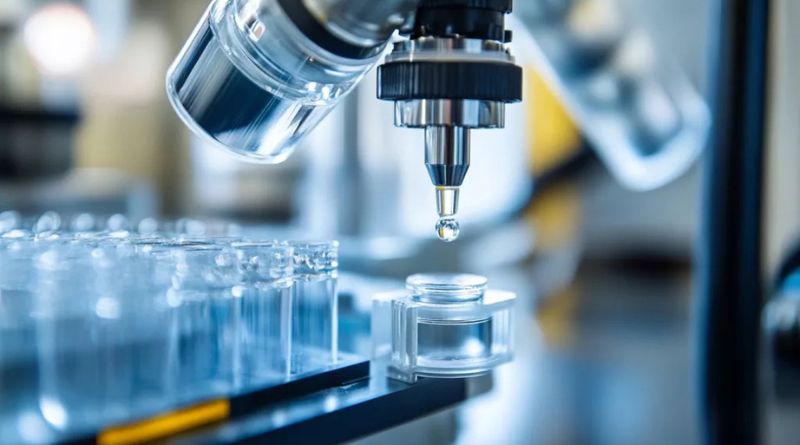
Artificial intelligence is revolutionizing the dispensing and application of adhesives across high-volume manufacturing. Smart dispensing systems equipped with AI algorithms automatically optimize variables, such as temperature, viscosity, and flow rates, adapting in real-time to changes in production speed or material type. This high degree of process control minimizes waste, improves bond reliability, and enhances overall productivity—critical benefits in industries such as electronics where accuracy and repeatability are vital. According to research from Forbes Tech Council, AI-driven automation is set to reshape industrial adhesive application for years to come.
High-Performance Adhesives for Extreme Environments
As industries push for lighter, more resilient materials, the demand for adhesives that function under extreme environmental conditions continues to surge. Aerospace and automotive manufacturers, in particular, are innovating with structural adhesives delivering high bond strength, thermal resistance, and superior durability compared to mechanical fasteners. These adhesives can withstand intense temperature swings, chemical exposure, and even vibration, supporting advancements in lightweight design and fuel efficiency without compromising safety.
Emergence of Smart Adhesives with Sensing Capabilities
The emergence of smart adhesives introduces a new era in monitoring and predictive maintenance. These next-generation products embed microsensors within adhesive layers to track temperature, strain, and joint integrity in real-time. By sending alerts before bond failure occurs, smart adhesives enable preventative action, which is especially crucial in sectors such as construction, transportation, and wind energy, where bond integrity is mission-critical. This proactive approach reduces maintenance costs and enhances product longevity.

Automation and Robotics in Adhesive Application
Robotics and precision automation are redefining industrial adhesive application. Automated adhesive systems guarantee consistent, error-free application even on complex surfaces and high-speed assembly lines. By minimizing material waste and ensuring repeatable outcomes, robots not only maximize efficiency but also support operators by handling challenging or hazardous tasks. This trend is especially pertinent in industries such as medical device manufacturing and electronics, where tolerances are tight and throughput is paramount.
3D Printing of Adhesives
The intersection of additive manufacturing and adhesives presents new possibilities for complex assemblies. As 3D printing becomes more widely adopted, specialty adhesives are being developed to work seamlessly with these processes. These formulations enable precise layer-by-layer bonding and unlock the potential for joining intricate geometries that would be impossible with traditional methods. This enhances design flexibility and accelerates product development cycles, opening new opportunities in both prototyping and finished goods.
Final Thoughts
The future of industrial adhesive solutions is defined by innovation, sustainability, and digital integration. As the market evolves, the focus will continue to be on developing adhesives that are stronger, safer, and smarter, with a keen eye on environmental impact and operational efficiency. Staying informed about these trends is essential for companies that intend to gain a competitive edge and align with modern manufacturing philosophies.