
Key Takeaways
- Understanding your rights during searches and seizures can help protect your legal interests.
- Fourth Amendment protections apply to individuals, homes, vehicles, and certain personal property.
- Law enforcement must generally have a warrant or probable cause to conduct a search or seizure.
Understanding Searches and Seizures
Searches and seizures represent a fundamental area in criminal law and can significantly impact your privacy and legal standing. If law enforcement stops you on suspicion of a crime, such as a DUI or drug offense, how you respond matters. It is essential to know that you have specific rights under both the federal and state constitutions. Consulting with experienced attorneys at a DUI defense firm may provide additional insight and effective legal counsel.
The Fourth Amendment to the United States Constitution protects against unreasonable searches and seizures by government officials. This protection is not absolute, and various exceptions or circumstances may limit or expand your rights depending on the context of your encounter with law enforcement.
The Fourth Amendment: An Overview
The Fourth Amendment protects your right to privacy in your body, your home, your possessions, and your communications. Before officers can search your home, car, or personal items, they usually must have a warrant based on probable cause, meaning they must convince a judge that there is a reasonable belief that a crime has occurred or that evidence is present.
However, there are many exceptions to the warrant requirement. For example, police may perform a search if you provide voluntary consent, if evidence is in plain view, or if there are exigent circumstances that require immediate action to prevent harm or destruction of evidence. Understanding the nuances of these rules may prevent unlawful searches and protect your constitutional rights.
Your Rights During a Police Encounter
The Right to Remain Silent
When approached by police, you have the right to remain silent. You do not need to answer questions about where you are going, what you are doing, or where you live. If you wish to exercise your right to remain silent, you should clearly state so to the officers.
Consent to Search
You are also entitled to refuse consent to a search. If police do not have a warrant or probable cause, they often ask for permission to search. If you consent, any evidence found becomes admissible in court. You can calmly and respectfully say, “I do not consent to this search.”
Searches of Your Home, Vehicle, and Person
Home
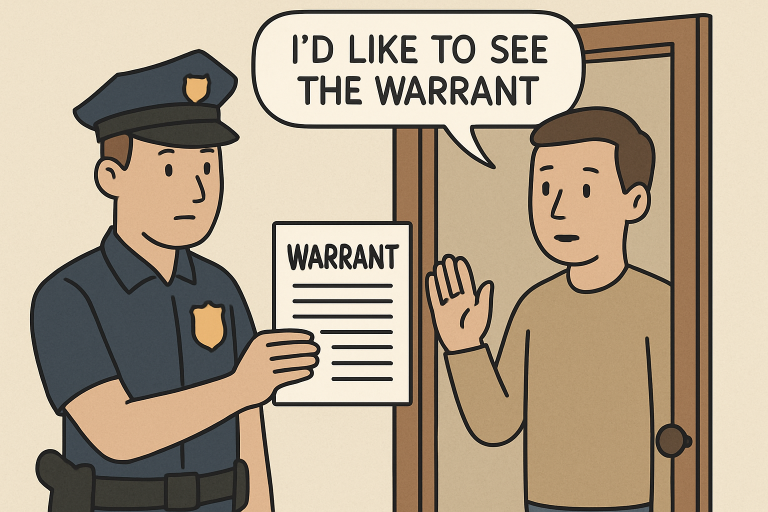
Except for a few emergencies, law enforcement must have a valid search warrant to enter and search your home. If officers claim to have a warrant, you may ask to see it. Carefully review it to ensure accuracy, including your address and the scope of the search.
Vehicle
Vehicle searches follow slightly different rules. If police have probable cause to believe your vehicle contains evidence of a crime, they may search it without a warrant. Otherwise, they need either your consent or a warrant. Always be clear if you do not give consent.
Personal Searches
If you are detained or arrested, police may pat you down for weapons or contraband. Beyond a superficial search, further searches generally require probable cause or your consent.
What to Do if Your Rights Are Violated
If you believe you have been subject to an unlawful search or seizure, you can challenge the admissibility of any evidence collected. Courts often exclude evidence obtained through illegal searches, thereby weakening the prosecution’s case. Filing a formal complaint or seeking advice from a criminal defense attorney can also help preserve your rights.
Defendants are sometimes unaware of remedies such as the exclusionary rule, which prevents unlawfully obtained evidence from being used at trial. Educating yourself about these rights and procedures is key to safeguarding your legal interests. For additional information, resources such as the ACLU’s guide to police encounterscan offer comprehensive insight for varied situations.
When Can Police Seize Your Property?
Seizures can occur when police believe certain items are associated with criminal activity. Such property might include contraband, stolen goods, or evidence relevant to a criminal investigation. A seizure must typically be supported by probable cause and, in many cases, a court order. Unlawful seizures can be contested, often with the assistance of a skilled defense attorney.
Exceptions to Warrant Requirements
There are several recognized exceptions to the warrant requirement. These include consent, lawful arrest incidents, exigent circumstances, the plain view doctrine, and stop-and-frisk procedures. Each of these scenarios has detailed legal standards, and improper application by police may render a search or seizure unlawful. The U.S. Courts website offers a thorough review of Fourth Amendment case law and its exceptions.
Protecting and Enforcing Your Rights
Knowing your rights is the first step toward protecting yourself during interactions with law enforcement. Remain calm, be respectful, and do not physically resist officers. If you experience an unlawful search or seizure, document what occurred and seek legal counsel as soon as possible. Many violations can be addressed after the fact through court motions or civil rights complaints.
Conclusion
Your rights during searches and seizures are fundamental to maintaining your privacy and liberty. By understanding the laws and your responsibilities, you help shield yourself from abuses of power and protect your constitutional freedoms. Take proactive steps to become informed, and always exercise your rights appropriately when interacting with law enforcement.