Key Takeaways
- Slab leaks occur in water lines located beneath or within a concrete foundation.
- Higher water bills, warm flooring, damp areas, low pressure, and running water sounds can all be warning signs.
- Accurate leak detection helps avoid unnecessary concrete removal and guides the repair decision.
- Repair options range from a targeted floor opening to rerouting lines, tunneling, or broader repiping.
A slab leak can stay out of sight while water escapes beneath a home’s concrete foundation. Because the pipe is hidden, homeowners may first notice indirect changes, such as a higher utility bill, a musty smell, or flooring that feels unusually warm. If several signs appear together, contacting slab leak detection plumbers in Ruston LA can help identify the source before water damage becomes more extensive.
Not every damp floor, crack, or high water bill means there is a leak under the slab. Rainwater drainage issues, condensation, appliance leaks, irrigation problems, and ordinary foundation movement can create similar symptoms. The important step is to look for patterns and confirm the cause before breaking into concrete or committing to a repair.
What Is A Slab Leak?
A slab leak is a leak in a plumbing pipe that runs beneath, through, or immediately below a concrete slab foundation. It may involve a cold-water line, a hot-water line, or, less commonly, a drain line. Even a small opening in a pressurized water line can release a steady stream of water over time, potentially affecting flooring, baseboards, framing, soil, and the foundation.
Early Signs Homeowners Should Not Ignore
Unexpected Changes In Water Use
A sudden increase in water use is often one of the earliest clues. Compare recent bills to the same month last year, while accounting for guests, seasonal irrigation, new appliances, or pool filling. The EPA’s household leak-checking guidancerecommends checking the water meter before and after a period with no water use. Meter movement may indicate a leak somewhere in the system.
Warm Or Damp Spots On The Floor
A leaking hot-water line can create a noticeably warm area on tile, vinyl, concrete, or other flooring. Damp carpet, warped materials, loose flooring, discoloration, and musty odors also deserve attention. These symptoms are not proof of a slab leak, but they are good reasons to arrange testing rather than assuming the moisture will disappear on its own.
Sounds From Below The Floor
Faint hissing, rushing, or running-water sounds when all fixtures are turned off can point to a hidden leak. First, rule out more accessible sources, including toilets with worn flappers, dripping faucets, water heaters, outdoor spigots, appliances, and irrigation lines.
Pressure, Flooring, And Wall Changes
Lower water pressure, cracked grout, lifted flooring, damp baseboards, or new cracks near walls may accompany a plumbing problem. Each sign can have another explanation, but a combination of changes should not be ignored.
What Causes A Slab Leak?
Older metal pipes can weaken through corrosion, mineral buildup, and failing joints or fittings. Soil movement can also place stress on buried plumbing. Settling, erosion, poor drainage, and expansive soil may shift the ground around a foundation and strain pipe connections.
Installation issues may contribute as well. Pipes that rub against gravel, concrete, or other materials can wear over time, while hot-water pipes repeatedly expand and contract. Excessive water pressure can further strain older pipes, valves, and joints, so pressure should be tested rather than guessed.
A Safe Homeowner Check Before Calling For Help
- Turn off faucets, showers, dishwashers, washing machines, and irrigation systems.
- Check toilets for silent leaks and inspect exposed pipes under sinks and near the water heater.
- Read the water meter, avoid using water for a set period, then read it again.
- Record any meter change, unusual sounds, warm spots, damp areas, cracks, and bill increases.
Avoid breaking concrete, adjusting gas equipment, or using electrical equipment near wet areas without appropriate training. A meter test can show that water is moving, but it cannot reliably identify where the leak is located.
How Professionals Locate The Leak
Locating the leak before opening a floor helps limit disruption and focus repairs on the actual problem. Depending on the home and pipe system, professionals may use pressure testing, acoustic listening equipment, thermal imaging for hot-water leaks, electronic line tracing, and moisture testing around floors or foundation walls. The best approach depends on pipe material, leak size, floor plan, and available access.
Repair Choices To Compare
Accessing The Pipe Through The Floor
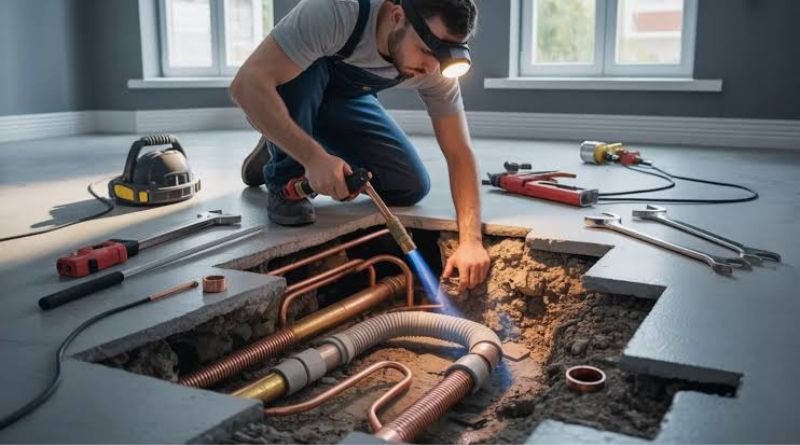
When the leak is isolated and accessible, a small portion of concrete may be opened so the damaged pipe can be repaired. This approach may be practical for a single failure, but it also requires drying the area and restoring the concrete and flooring afterward.
Rerouting The Water Line
Rerouting bypasses the failed section beneath the slab by installing a new water line path. It can reduce the need for concrete removal and may be a strong option when the damaged section is difficult to reach or likely to fail again.
Tunneling Or Broader Repiping
Tunneling provides access from beneath the slab and can reduce disruption to interior flooring, although it requires careful soil work and foundation protection. If leaks are recurring or multiple lines are deteriorating, replacing several lines or repiping may offer better long-term value than repeated spot repairs.
How To Reduce Damage While Waiting
- Shut off the main water supply if the leak appears active or worsening.
- Move rugs, furniture, electronics, and stored items away from wet areas.
- Photograph visible damage and keep notes about dates, meter readings, and water use.
- Use fans only when electrical conditions are dry and safe.
- Keep children and pets away from wet flooring or any open concrete area.
Prevention And Routine Monitoring
Review water bills monthly, inspect exposed plumbing connections, and address drainage problems that allow water to collect near the foundation. Monitor water pressure when fixtures seem unusually forceful or weak. Leak detection devices can also alert homeowners to unusual flow. Routine checks are especially useful because common household leaks can waste significant water before they become visible.
Common Questions About Slab Leaks
Can A High Water Bill Confirm A Slab Leak?
No. It can signal a leak, but the source could be a toilet, an irrigation line, an appliance, a faucet, or an outdoor connection.
Can A Slab Leak Damage The Foundation?
Long-term water loss may affect the surrounding soil and contribute to moisture-related damage. However, not every foundation or floor crack is caused by plumbing.
Does Every Slab Leak Require Concrete Removal?
No. Rerouting and tunneling may reduce the need for interior concrete removal in some situations.
Final Decision Checklist
- Confirm whether the meter changes when water is off.
- Rule out visible fixtures, appliances, and irrigation leaks.
- Document warm, damp, cracked, or noisy locations.
- Obtain an accurate leak location before concrete work begins.
- Compare repair choices based on pipe condition, access, disruption, and long-term reliability.
A slab leak may begin quietly, but quick attention can reduce water waste, property damage, and repair disruption. A careful meter check provides a useful first clue, while professional testing can determine the location and support a repair plan that fits the home.