Key Takeaways
- Removal is not always the first or only solution. Pruning or other tree care may be appropriate in some cases.
- Height, condition, access, nearby structures, and power lines all affect the removal method.
- Written estimates should clearly identify cleanup, stump work, hauling, and possible additional charges.
- Local rules, property lines, utility concerns, and HOA requirements should be checked before work begins.
- Storm-damaged trees can be unpredictable, especially when limbs are hanging or roots have shifted.
From Lowcountry live oaks and coastal pines to mature hardwoods in Upstate neighborhoods, South Carolina trees can add shade, character, and value to a property. They can also create real hazards when decay, storm damage, root problems, or crowded growing conditions affect their stability. Before scheduling removal, homeowners should understand what drives a tree removal cost in South Carolina and what a safe, complete work plan should cover.
A careful approach matters in every part of the state. Heavy summer rain can soften soil, tropical weather can leave broken limbs overhead, and tight suburban lots can place large trees close to roofs, fences, driveways, and utility lines. The right plan is based on the individual tree and site, not a one-size-fits-all quote.
Why Tree Removal Plans Differ From Yard to Yard in South Carolina
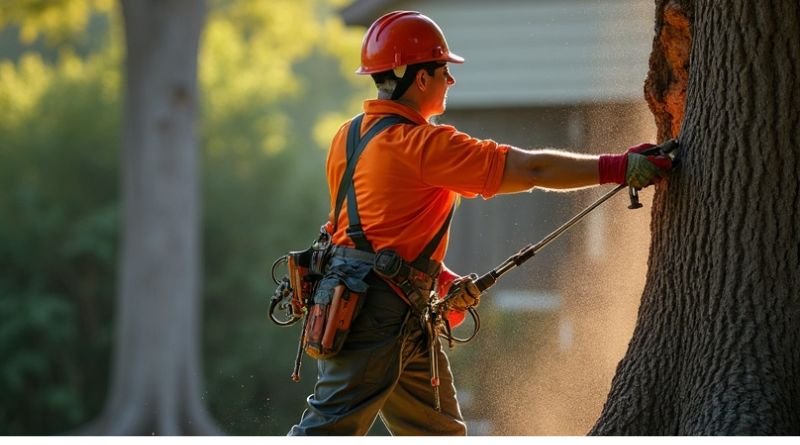
A small ornamental tree in an open Midlands yard may be removed with a straightforward plan. A tall pine leaning toward a Charleston-area home or a decaying hardwood above a Greenville driveway may require staged cutting, rigging, and carefully controlled lowering of every section. Tree species, trunk diameter, deadwood, cavities, root condition, slope, gate width, and truck access all influence the work. South Carolina weather also affects scheduling and safety. Saturated ground can make equipment access more difficult, while wind, lightning, and heavy rain may make climbing or crane work unsafe. A reputable crew should be willing to pause rather than force work under unsafe conditions.
Questions to Ask Before Hiring a Tree Removal Crew in South Carolina
Homeowners looking for a dependable tree care service in South Carolina should ask direct questions before agreeing to a job. Clear answers help prevent confusion once the equipment arrives.
- Is the company properly licensed where licensing is required?
- Does it carry current liability insurance and workers’ compensation coverage?
- Who will inspect the tree and explain the proposed method?
- Will the crew climb and dismantle the tree, use a crane, or fell it in one direction?
- How will roofs, lawns, driveways, gardens, and fences be protected?
- Is stump grinding included, optional, or excluded?
- Who keeps or removes logs, branches, chips, and sawdust?
- What happens if the crew finds hidden decay, inaccessible sections, or another unsafe condition?
When Removal May Be Necessary
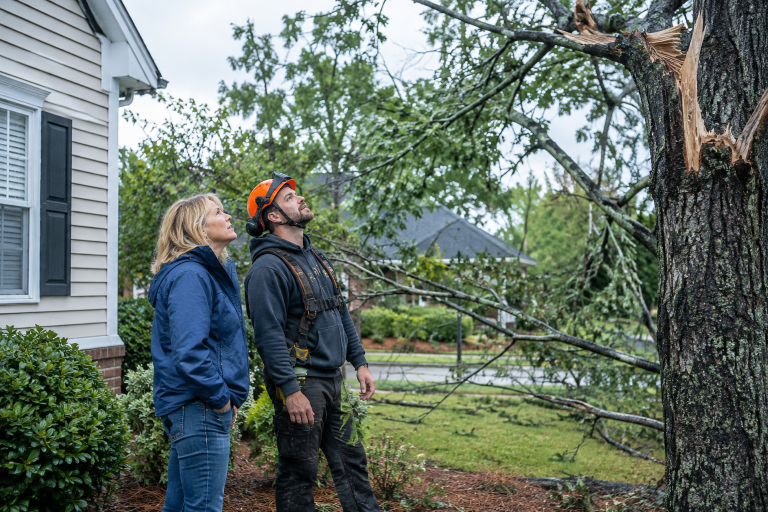
Visible damage does not automatically mean a tree must be removed. However, large dead limbs over a roof or walkway, deep trunk cracks, fresh changes in lean, repeated branch failure, fungal growth near the base, or major root disturbance deserve prompt attention. Clemson Extension notes that storm damage can create wounds that allow insects and disease organisms into a plant, so a close inspection after severe weather is sensible. This storm damage can also affect root systems, which are not always easy to assess from the surface. A qualified professional can help distinguish between a tree that needs selective pruning and one that presents an unacceptable risk. The decision should consider the tree’s structure and health, the target areas below it, and the likelihood that people or property could be harmed if a limb or a section of the trunk fails.
What a Complete Written Estimate Should Include
Comparing estimates based solely on the final number can be misleading. One proposal may include full hauling and stump grinding, while another may cover cutting only. Ask for a written scope that identifies the tree or trees, removal method, equipment, labor, debris handling, stump service, site cleanup, and payment terms. It is also wise to clarify likely add-ons before work starts. Emergency response after a storm, limited backyard access, crane use, traffic management, exceptionally large logs, and disposal needs can change the cost. A lower quote may not be the lower overall expense if essential work is left out.
Common Tree Removal Methods
Climbing and Sectional Removal
For crowded residential properties, trained workers may remove limbs and trunk sections in smaller pieces. Rigging can help guide material away from vulnerable areas when there is no safe drop zone.
Crane-Assisted Removal
A crane may be useful when large pieces must be lifted over a house, fence, or other obstacle. It requires enough space for setup and a plan that accounts for ground conditions and access.
Directional Felling
Felling a tree in one piece can be efficient only when there is a large, clear landing area and the tree’s condition allows it. It is generally not appropriate for cramped lots or trees with compromised structure.
Permits, Property Lines, and Utilities in South Carolina
Rules can vary among South Carolina cities, counties, planned communities, and historic districts. Before removal, verify whether local ordinances protect certain trees, whether an HOA approval is needed, and who owns a boundary tree. Do not assume that a tree close to a property line belongs entirely to one homeowner. Stump grinding, replacement planting, fence repairs, and landscaping can involve digging. South Carolina homeowners should arrange utility marking before excavation. SC811 homeowner guidance advises contacting 811 at least three full working days before digging and explains that private lines may not be included in standard utility markings.
Preparing the Yard and Avoiding Surprises
- Move vehicles, patio furniture, grills, and fragile items from the work area.
- Keep children, pets, and visitors away from the active removal zone.
- Tell the crew about irrigation, septic components, invisible fencing, drainage features, and buried lines.
- Clear access through gates and driveways, and confirm where trucks may park.
- Take photos of nearby structures and landscaping before work begins.
- Confirm where logs or mulch should go, if they are staying on-site.
After the Tree Comes Down
Walk the site with the crew leader before the job is considered complete. Confirm that debris removal, stump work, and raking match the agreement. Check nearby roofs, fences, and turf, then decide whether wood chips can be used as mulch or should be hauled away. If the removal leaves an empty area, consider a replacement suited to the available space, sunlight, soil, and distance from structures. Thoughtful replanting can help preserve the shade and neighborhood character that make South Carolina yards feel established, while reducing the chance that a mature tree will outgrow its location.
Conclusion
Tree removal in South Carolina requires more than simply cutting down a tree. The tree’s condition, size, location, surrounding structures, access, utilities, and local requirements should all be considered before work begins. Homeowners can reduce surprises by comparing detailed written estimates, confirming what is included for cleanup and stump work, and asking how the crew plans to handle potential hazards. After storms or when a tree shows signs of instability, a professional assessment can help determine whether removal, pruning, or other forms of tree care are appropriate. With careful planning and clear communication, homeowners can approach tree work with a better understanding of the costs, safety considerations, and responsibilities involved.