
Key Takeaways
- Choose each treatment according to the room’s everyday purpose, not color alone.
- Raleigh homes benefit from planning for bright sun, privacy, humidity, changing seasons, and outdoor views.
- Shades, blinds, shutters, drapery, and motorized controls each solve different light and comfort challenges.
- Accurate measurements, mounting clearance, and appropriate materials are as important as appearance.
- A room-by-room strategy usually yields better results than repeating the same product throughout the house.
Window treatments can make a Raleigh, North Carolina, home feel more comfortable, private, and usable throughout the day. Whether a window faces a sunny backyard, a busy neighborhood street, or a shaded stand of mature trees, the right covering should address the real concern first. Homeowners who need a blind repair service in Raleigh, NC, can also use the opportunity to reconsider whether their current treatments still fit the room’s light, privacy, and daily-use needs.
Raleigh’s warm, humid summers and mild but variable winters make flexible window control useful in many homes. Afternoon sunlight can create glare in living areas and home offices, while street-facing windows may need privacy after dark. Start with the way each space is used, then choose a treatment that supports that routine.
There is no single best answer for every Raleigh window. A bright breakfast nook, a second-floor bedroom, and a work-from-home office may all need different levels of daylight, insulation, and adjustability. Before comparing materials, note when sunlight enters, whether neighbors can see in, and how often the covering must be moved.
If you are searching for blinds installed near me, bring those observations with you. They make it easier to compare options based on practical performance rather than selecting a style that looks appealing but does not address the window’s main problem.
Start With What the Window Needs To Do
Window coverings can manage sunlight, privacy, insulation, and decoration. A broad overview of window-covering materials shows how wide the category is, ranging from blinds and shades to shutters and drapery. For every window, ask: Which direction does it face? When is direct sunlight strongest? Is privacy needed during the day, at night, or both? Does the room need to be dark for sleep? Is the window hard to reach? Will pets, children, moisture, or cooking residue affect the material?
Match Treatments to Each Room
Living Rooms and Gathering Spaces
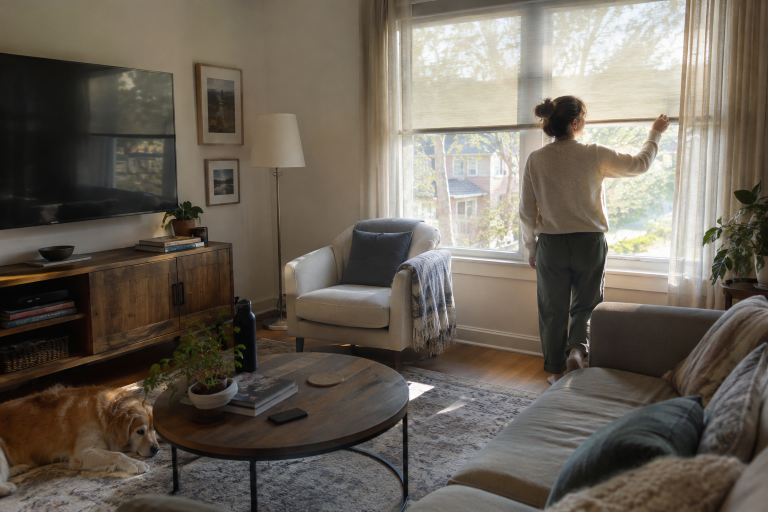
Use light-filtering shades to soften daylight while maintaining an open feeling. Solar shades can help reduce glare on televisions, and layering a shade with drapery gives the room more control for movie nights or evening privacy.
Bedrooms
Bedrooms often benefit from room-darkening or blackout fabrics, especially where early morning sun is unwelcome. Cellular shades and lined drapery can add another layer between the room and the glass. Cordless or motorized operation can be useful for tall, wide, or difficult-to-reach windows.
Kitchens, Bathrooms, and Home Offices
In kitchens and bathrooms, choose moisture-resistant, easy-clean materials and preserve access to the window for ventilation. In a Raleigh, North Carolina home office, adjustable shades can limit screen glare without turning a productive room into a dark one. Light-filtering materials are also helpful for video calls because they soften harsh daylight.
Compare Common Window Treatment Types
- Roller shades: Clean-lined, compact, and available in a range of fabrics and opacity levels.
- Solar shades: Designed to reduce glare and soften strong sun while retaining some outward visibility.
- Cellular shades: A practical choice where privacy and added insulation are priorities.
- Roman shades: Useful for adding texture, fabric, and visual warmth.
- Wood or faux wood blinds: Offer adjustable slats and a durable, structured appearance.
- Shutters: Provide a tailored architectural look with precise control over light direction.
- Drapery: Adds softness, can improve light blocking, and works well when layered over another treatment.
Balance Light and Privacy
Light-filtering, room-darkening, and blackout are not interchangeable. A sheer or light-filtering shade may reduce visibility and diffuse daylight, but it may not provide complete privacy after interior lights come on at night. For Raleigh homes close to sidewalks or neighboring properties, consider a layered approach. A shade can serve daytime needs, while drapery supplies greater coverage later.
Top-down, bottom-up shades are another useful option for windows where privacy matters but daylight is still welcome. They can cover the lower portion of a window while allowing light to enter above eye level.
Improve Comfort Near Windows
Window treatments can enhance comfort by managing direct sun, glare, and heat or drafts near glass. Their effect depends on the existing window, the material, how closely the treatment fits, and whether it is actually closed when needed. The U.S. Department of Energy notes that blinds, curtains, and shades can block direct summer sunlight, which is especially relevant for sunny rooms in Raleigh.
- Use solar shades in bright rooms where glare is the primary issue.
- Consider cellular shades where a more insulating design is desired.
- Add lined drapery when softness and stronger light blocking are important.
- Choose blinds or shutters when frequent, precise light adjustment matters.
Decide When Smart Controls Make Sense
Motorized shades are most useful for high or oversized windows, frequently adjusted coverings, or daily routines. Scheduled operation can raise shades in the morning, reduce afternoon glare in a work area, or close bedroom coverings at bedtime. Before choosing automation, confirm power options, smart-home compatibility, manual operation, battery maintenance, and whether the system solves a real household need.
Measure and Mount Treatments Correctly
Correct measurements affect privacy, light gaps, appearance, and window function. Inside mounts fit within the frame and require sufficient depth. Outside mounts extend beyond the opening and can provide more coverage. Measure width and height at more than one location, check the smallest inside dimension when required, and inspect locks, handles, trim, sill shape, and the window’s opening before ordering.
Avoid Common Buying Mistakes
- Choosing a color before identifying the room’s main challenge.
- Using the same opacity and fabric everywhere in the house.
- Ignoring the afternoon sun, seasonal changes, or nighttime privacy.
- Measuring once and overlooking obstructions near the frame.
- Selecting materials unsuited to moisture, pets, or heavy use.
- Adding motorization without checking power and compatibility.
- Making a final decision from a small online image instead of reviewing a sample in the room.
Use a Simple Selection Checklist
- Write down the main concern for each window.
- Note the window direction and the strongest sunlight hours.
- Choose the needed privacy level.
- Decide among filtered light, room-darkening, or blackout coverage.
- Select materials appropriate for cleaning, moisture, pets, and daily use.
- Check frame depth, mounting space, and window hardware.
- Compare manual, cordless, and motorized operation.
- Review samples in the actual Raleigh room before deciding.
Conclusion
The right window treatment for a Raleigh, North Carolina home is the one that fits the window’s real purpose and the household’s routine. By considering light, privacy, comfort, measurement, and ease of operation together, homeowners can create rooms that feel calmer, more functional, and better suited to everyday life.