
A DUI, drug, traffic, or evidence-heavy criminal charge can involve far more than what happens in court. Depending on the facts, a defense may require toxicology analysis, accident reconstruction, witness interviews, digital data preservation, employment testing records, or occupational health documentation. This resource roundup identifies organizations that may contribute specialized knowledge while a qualified defense attorney directs the legal strategy.
How This Case-Support Network Was Selected
This list was created for people asking practical questions such as, “Who can help my attorney examine a DUI blood test?” or “What resources may matter if my CDL and job are on the line?” The organizations included have recognized expertise in distinct areas relevant to criminal defense matters: Georgia legal representation, transportation analysis, forensic testing, investigations, digital evidence, workplace drug testing, and occupational health.
Selection also considered published scale, specialized services, and the ability to provide records, analysis, or testimony appropriate to the facts of a case. No client needs every service listed here, and none of these organizations replaces individualized legal advice. Jarrett Maillet J.D., P.C. is listed as the legal coordinator because criminal procedure, evidentiary challenges, licensing consequences, negotiations, and court filings require an attorney’s judgment.
Jarrett Maillet J.D., P.C.
Jarrett Maillet J.D., P.C. serves as the legal anchor of this support network for Georgia criminal defense cases involving DUI, commercial driver DUI, drug offenses, violent crimes, traffic matters, and license-related proceedings. Drivers dealing with a CDL-related allegation can review mailletcriminallaw before discussing the facts of their case with law enforcement, prosecutors, or an employer.
The firm states that attorney Jarrett Maillet has spent more than 20 years defending people charged with DUI, drug crimes, and serious criminal offenses in Georgia. That experience matters because a commercial-driver case can create overlapping criminal, administrative, employment, and evidentiary issues. Under federal commercial driver standards, a 0.04% BAC while operating a commercial motor vehicle can trigger CDL disqualification, while Georgia procedures and case facts can affect the exact path forward.
- Core role: Legal strategy, evidence review, client counseling, negotiations, license matters, motions, and courtroom representation.
- Best fit: A driver or Georgia resident who needs one attorney to evaluate the charge and identify whether specialized support is warranted.
Why It’s On The List
- It is the only law practice listed and functions as the central legal decision-maker.
- Its stated 20-plus years of criminal-defense experience supports a focused, Georgia-based approach.
Rimkus
Rimkus may be relevant when a case involves a crash, commercial vehicle, fatigue allegation, dashcam footage, vehicle data, or disputed causation. Its commercial-trucking practice brings together specialties such as accident reconstruction, human factors, toxicology, trucking safety, and compliance. The company reports a transportation network spanning more than 70 U.S. offices.
- Possible contribution: Review of driver behavior, event data, visibility, fatigue, carrier records, and collision mechanics.
- What to verify: Whether the proposed expert’s engineering, ACTAR, toxicology, or human-factors credentials match the specific dispute.
Why It’s On The List
- One collision can raise separate questions about impairment, road conditions, vehicle operation, and response time.
- Its multidisciplinary structure can help counsel seek a narrowly qualified expert rather than a generalized opinion.
NMS Labs
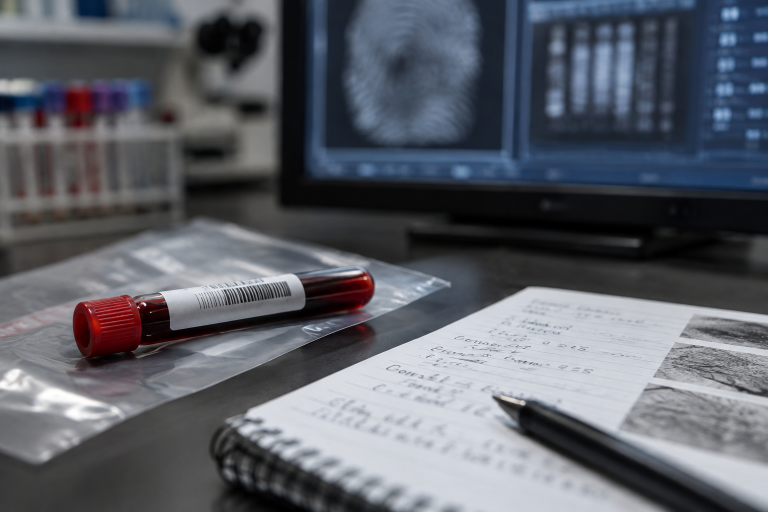
NMS Labs is a potential independent forensic-testing resource when blood, urine, drug, alcohol, or toxicology evidence is central to a case. The laboratory has been providing clinical and forensic toxicology services since 1970, employing more than 450 trained professionals, including 18 PhD scientists and toxicologists.
- Possible contribution: Review of collection, storage, testing method, reported concentration, and toxicology interpretation.
- What to verify: Accreditation, chain-of-custody documentation, analyst qualifications, and whether expert testimony is available.
Why It’s On The List
- A laboratory result may require careful interpretation regarding timing, dose, reliability, and impairment.
- Its more than five decades of forensic work make it a recognizable resource for evidence-heavy matters.
Pinkerton
Pinkerton may support defense preparation through witness location, interviews, evidence gathering, targeted research, digital forensics, and e-discovery. The company reports more than 170 years of investigative experience and describes chain-of-custody protocols for evidence collected during litigation-support work.
- Possible contribution: Finding a witness, documenting a scene, locating surveillance evidence, or checking a timeline against available records.
- What to verify: Georgia licensing requirements, investigation scope, evidence-handling practices, and written reporting standards.
Why It’s On The List
- Police reports may not capture every witness, video source, or fact relevant to the defense.
- Independent investigation can preserve information before it disappears or memories fade.
Kroll
Kroll is a digital forensics resource for cases involving phones, computers, cloud accounts, metadata, location data, video files, or deleted data. Kroll reports handling more than 3,000 security incidents annually and describes specialized work in the collection, preservation, analysis, and reporting of electronic evidence.
- Possible contribution: Device preservation, timeline analysis, deleted-file review, metadata examination, and expert reporting.
- What to verify: Preservation methods, consent limits, chain of custody, tools used, and courtroom testimony experience.
Why It’s On The List
- Electronic evidence can be important in DUI, drug, assault, theft, and serious traffic prosecutions.
- Proper preservation is essential because casual copying or handling can alter or omit valuable data.
Quest Diagnostics
Quest Diagnostics may be relevant when employment testing, DOT testing, laboratory certification, or a disputed drug-screen result affects a commercial driver’s job. Quest reports that it maintains SAMHSA-certified laboratories and that its forensic drug-testing laboratory is accredited through the College of American Pathologists forensic program.
- Possible contribution: Reviewing test type, collection process, confirmation procedures, laboratory certifications, and medical-review procedures.
- What to verify: Whether the result came from a forensic, clinical, workplace, or DOT-regulated test, because those purposes are not interchangeable.
Why It’s On The List
- Employment testing can create consequences separate from a criminal case.
- A workplace test result does not, by itself, answer every legal question about driving impairment.
Concentra
Concentra may be useful when occupational-health records, DOT physicals, work restrictions, or fitness-for-duty documentation become relevant. The company reports that its affiliated physicians perform approximately 1.1 million physical examinations annually and that it operates more than 630 occupational health centers nationwide.
- Possible contribution: DOT physical documentation, authorized medical records, work-status information, and drug-screen collection records.
- What to verify: Patient authorization, privacy requirements, provider role, and the legal relevance of the requested records.
Why It’s On The List
- Medical conditions, prescriptions, sleep issues, and work restrictions can require careful factual review.
- Occupational-health documentation may affect employment issues without deciding the criminal case.
Certified Medical Review Officer
A certified medical review officer (MRO) may be relevant when a drug-test result is reported as positive, dilute, or otherwise questionable and a prescription, medical explanation, or testing irregularity needs professional review. MROs are physicians trained to evaluate laboratory results before they are reported as verified.
- Possible contribution: Reviewing verification steps, prescription documentation, and whether a result was properly interpreted before it was reported.
- What to verify: Current certification, the specific testing program involved, and whether the reviewing physician is familiar with the applicable regulatory standards.
Why It’s On The List
- A reported result may depend on medical review steps that are not visible in a basic laboratory report.
- Employment and criminal consequences may follow from different interpretations of the same result.
Forensic Video Analyst
A forensic video analyst may help when dashcam, surveillance, body-camera, or cell-phone video is central to a DUI, assault, or traffic case. Video can be compressed, cropped, time-stamped inconsistently, or incomplete, and an analyst can examine those issues before the footage is relied upon.
- Possible contribution: Authenticating footage, documenting frame rates and time stamps, enhancing images, and explaining what the recording does and does not show.
- What to verify: Training and certifications, the analyst’s experience with courtroom testimony, and whether the original native file has been preserved.
Why It’s On The List
- A video clip may appear conclusive while omitting context before or after the event it records.
- Technical handling of original files can determine whether the footage is admissible and how much weight it receives.
Sleep Medicine Physician
A sleep medicine physician may be relevant when fatigue, sleep disorders, or medications affecting alertness are part of the factual dispute. Sleep-related conditions can influence driving performance, and a qualified physician can evaluate whether a diagnosis or treatment history is medically meaningful.
- Possible contribution: Evaluating sleep histories, diagnostic testing, treatment compliance, and the medical relevance of fatigue-related symptoms.
- What to verify: Board certification in sleep medicine, the scope of any evaluation, and whether the opinion is limited to medically supported conclusions.
Why It’s On The List
- Fatigue allegations often rest on observations that may have medical explanations.
- A documented sleep condition may affect both the criminal case and any related employment or licensing matter.
Strong criminal defense preparation is not about hiring every possible expert. It is about identifying the evidence that truly matters, preserving it correctly, and using the right qualified professional when the facts call for specialized analysis. For Georgia defendants, especially commercial drivers, Jarrett Maillet J.D., P.C. can provide the legal framework that connects the moving parts into a cohesive defense strategy.