Table of Contents
- Key Takeaways
- Enhancing Picking Efficiency
- Improving Worker Safety
- Integrating with Warehouse Management Systems
- Adapting to Various Warehouse Layouts
- Cost-Effectiveness and ROI
- Future Trends in Pick Cart Technology
- Conclusion
Key Takeaways
- Pick carts dramatically improve warehouse productivity and order fulfillment speed.
- They help reduce labor costs while improving accuracy and worker safety.
- Modern pick carts can be seamlessly integrated with warehouse management systems for real-time efficiency.
- These tools are highly adaptable and provide a quick return on investment, especially for growing businesses.
- Future advancements will see pick carts collaborate with automation and AI for smarter workflows.
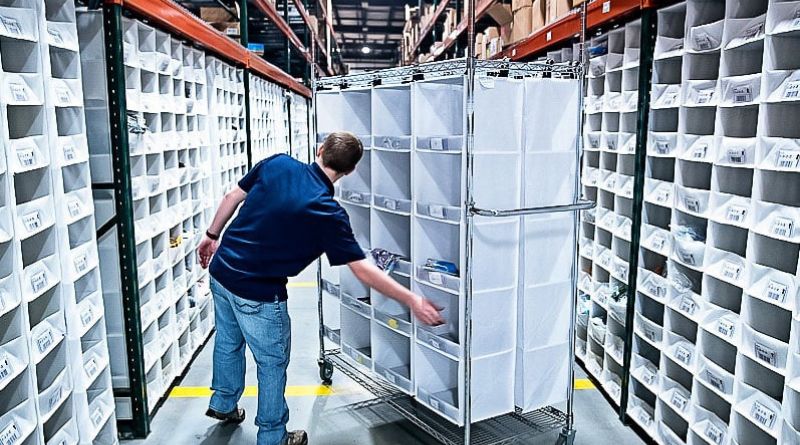
In today’s competitive warehousing environment, achieving greater efficiency is crucial to profitability and customer satisfaction. A critical tool at the heart of many streamlined operations is the pick cart. Designed to boost productivity, order picking carts enable staff to consolidate multiple order picks into a single journey, minimizing both travel time and order-processing delays.
Pick carts enhance warehouse efficiency by reducing unnecessary foot traffic, optimizing pick paths, speeding up picking cycles, and minimizing errors. Ergonomically designed carts support worker safety and well-being, helping address risks such as repetitive strain injuries. Their adaptability and compatibility with digital systems make them essential tools for scaling operations, improving workflow, and maintaining agility in dynamic e-commerce and retail environments.
Enhancing Picking Efficiency
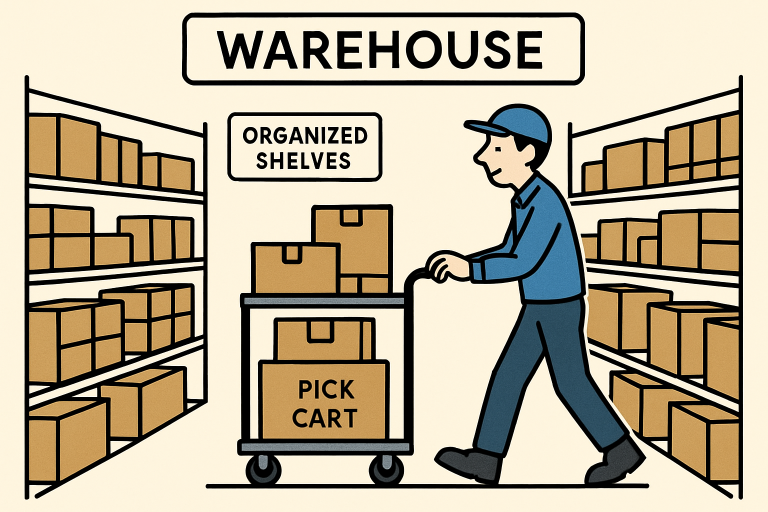
Pick carts play a transformative role in batch picking—a strategic method that enables multiple orders to be fulfilled simultaneously. By grouping orders geographically and by SKU, workers can pick stock more efficiently, often achieving picking speeds up to three times faster than single-order methods. This bulk approach to order gathering not only saves time but also significantly reduces worker fatigue and congestion in busy warehouse aisles.
Improving Worker Safety
The evolution of pick cart design emphasizes ergonomics, with features such as adjustable handles, lightweight frames, and easily maneuverable wheels. This thoughtful engineering reduces the strain on workers, mitigating the risks of musculoskeletal injuries commonly associated with heavy lifting and repetitive movements. Studies featured in OSHA guidelines underscore the importance of ergonomically designed carts, stating that well-chosen equipment can decrease injury rates and promote longer, healthier employee tenures.
Integrating with Warehouse Management Systems
The synergy between physical equipment and digital oversight has shaped the modern warehouse. Today’s pick carts can come equipped with barcode scanners, tablet mounts, or even built-in screens that connect directly to Warehouse Management Systems (WMS). Such integration bolsters inventory accuracy and provides supervisors with real-time visibility into order progress, picking habits, and fulfillment rates. These data-driven insights enable proactive management and immediate adjustments that can eliminate inefficiencies and reduce costly mistakes.
Adapting to Various Warehouse Layouts
No two warehouses are exactly alike, making flexibility in material handling tools essential. Pick carts are highly customizable, accommodating unique aisle sizes, racking configurations, or product mixes. Whether operating in narrow urban facilities, expansive distribution centers, or even cold storage rooms, customizable carts ensure effective movement of products without the need for costly infrastructure changes. Their adaptability enhances throughput and supports a smooth transition as businesses grow or reconfigure their layout.
Cost-Effectiveness and ROI
Pick carts represent a relatively low-cost investment compared to fully automated picking systems, and their operational benefits are realized rapidly. With improved picking rates, order accuracy, and reduced physical strain on workers, many businesses see a tangible improvement in productivity and a decrease in worker turnover. The resulting savings in labor costs, along with higher customer satisfaction, typically lead to a favorable return on investment within the first year of adoption—particularly for warehouses seeking scalable, flexible solutions.
Future Trends in Pick Cart Technology
Advances in automation and artificial intelligence are shaping the horizon for pick carts. As warehouses experiment with Autonomous Mobile Robots (AMRs) and AI-powered order fulfillment systems, pick carts are evolving to work in tandem with these technologies. Smart carts, equipped with sensors and location tracking, can interact with AMRs for hands-free movement of goods or leverage predictive analytics to reduce inefficiencies in pick routes further. Industry experts suggest that blending AI and robotics with pick carts will continue to drive warehouse optimization, keeping human workers at the center of control and adapting to ever-changing demands.
Conclusion
Pick carts have become indispensable in modern warehouse operations. Their ability to increase picking speed, safeguard workers, and adapt to a range of warehouse environments positions them as fundamental to warehouse efficiency and cost-effectiveness. As the industry embraces new technology and heightened expectations, investing in quality pick carts will remain a reliable strategy for streamlined workflows and robust growth.