
Key Takeaways
- Workplace protection is strongest when personnel, procedures, access rules, and technology support one another.
- A staffing plan should reflect a site’s daily activity, operating hours, entrances, visitors, and risk areas.
- Clear credentials and visitor procedures help organizations manage who can enter sensitive spaces.
- Emergency plans need regular practice, defined responsibilities, and more than one way to communicate.
- A small set of meaningful measures can help leaders identify gaps and improve readiness over time.
From busy Boston office towers and university-adjacent buildings to distribution sites, life sciences facilities, and suburban corporate campuses, Massachusetts workplaces face very different daily operating conditions. A practical safety program begins by matching protection measures to the people, property, and work taking place at each location. For organizations assessing coverage options, security staffing services in Massachusetts can be part of a broader plan that includes access management, employee training, visitor procedures, and incident response. The goal is not simply to place personnel at a door. It is to create reliable routines that help people make sound decisions when conditions change.
Why Workplace Protection Requires a Complete Plan
A visible security presence can support a safer environment, but it cannot solve every operational problem alone. Employees need to know how to report a concern, visitors need clear directions, managers need escalation paths, and responders need accurate information. When those pieces fit together, an organization can reduce confusion and maintain continuity during routine disruptions as well as serious incidents. Layered protection does not have to mean an overly complex system. It can start with a staffed reception point, well-maintained doors, clear badges, posted emergency procedures, and a reliable process for communicating with supervisors. The right combination varies by site, especially when a Massachusetts facility operates across multiple shifts or receives regular deliveries, contractors, patients, students, clients, or members of the public.
Step 1: Review the Site’s Daily Risks
Before selecting personnel or technology, walk through the property during normal operations. Include employees from different departments and shifts because their experience often reveals issues that are easy to miss during a daytime office walkthrough.
Questions to Ask
- Who enters the property each day, and how are they identified?
- Which rooms hold sensitive records, equipment, materials, or inventory?
- When are entrances, parking areas, loading zones, and reception areas busiest?
- What changes during shift transitions, weekends, holidays, or special events?
- Where could a delayed report or unclear message create a safety issue?
- Which locations would be difficult to monitor or reach quickly?
Step 2: Match Security Staffing to Real Workflows
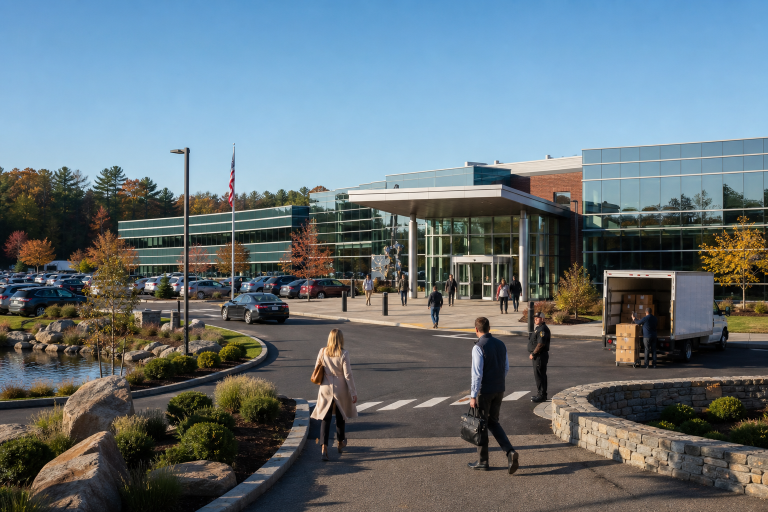
Staffing decisions should follow real movement through the site, not square footage alone. A fixed post may suit a busy lobby where visitor screening and directions are important. Mobile patrols can help cover larger properties, parking areas, and exterior doors. Event coverage may be appropriate when a typical workplace expects an unusually high volume of guests. Each assignment should have a purpose that employees and supervisors understand.
Factors That Shape a Staffing Plan
- The number and location of entrances and exits
- Operating hours and overnight activity
- Employee, visitor, contractor, and delivery volume
- Public-facing services and customer interactions
- Parking, perimeter, and loading-dock conditions
- Site-specific incident history and known operational concerns
- Available supervisors and coordination with property management
Step 3: Set Clear Duties for On-Site Personnel
Unclear responsibilities can delay action. Every post should have concise written instructions for normal operations and emergencies. These instructions should identify who to contact, what details to record, what authority the role has, and when to involve emergency services.
Common Duties to Define
- Greeting, screening, and directing visitors
- Checking credentials and managing temporary badges
- Monitoring entrances and restricted areas
- Reporting unusual activity or unsafe conditions
- Responding to alarms and escalating concerns
- Supporting evacuation, shelter, medical, or lockdown procedures
- Completing timely, objective incident reports
Step 4: Improve Access Control and Credential Management
Access control answers three practical questions: who may enter, where they may go, and when that permission ends. Electronic credentials can help manage those decisions, but administrative discipline matters as much. Organizations should assign access based on job needs, distinguish among employee, contractor, and visitor credentials, and review permissions after changes to roles or schedules. Former employees and departing contractors should be removed from access systems promptly, in accordance with an established offboarding process. Temporary badge logs, door testing, and periodic access-log reviews also help identify errors before they become larger issues. Technology can connect access records, visitor tools, cameras, and reporting, but it still requires responsible oversight and privacy-aware policies.
Step 5: Build a Simple Incident Response Process
An effective response plan gives people a straightforward sequence to follow: detect, confirm, notify, act, record, and review. It should explain who verifies an initial report, who receives the alert, and what actions are appropriate for different situations. The plan should also account for alternate contacts if a manager or primary responder is unavailable. Emergency planning should address reporting methods, evacuation procedures, accountability, and employee responsibilities. Organizations can use emergency action plan requirements as a useful reference when reviewing the core elements of their procedures.
Step 6: Train Staff Through Short, Regular Practice
A policy that remains in a folder will not guide people under pressure. Short, recurring practice sessions can reinforce reporting methods, meeting locations, communication expectations, and individual responsibilities. Training should be appropriate to the work environment and should include employees on less traditional schedules, not only those present during standard business hours.
Useful Training Topics
- Recognizing unsafe conditions and concerning behavior
- Reporting concerns without unnecessary escalation
- Managing unknown visitors and contractors
- Using radios, phones, alerts, intercoms, or panic devices
- Supporting people with mobility, hearing, vision, or language needs
- Protecting privacy while sharing essential incident details
Workplace leaders can also draw on workplace violence prevention guidance to strengthen reporting culture, planning, and response coordination.
Step 7: Use Technology as a Support Tool
Cameras, electronic credentials, emergency notifications, intercoms, and mobile reporting tools can improve visibility and speed communication. Before adding a system, identify the specific problem it will solve, who will monitor alerts, what happens during a power or network interruption, and who can access the information it collects. Technology should support informed human judgment, not replace it.
Step 8: Measure What the Program Is Doing
Leaders do not need dozens of metrics to see whether a program is working. A focused set of measures can reveal recurring problems and confirm whether improvements are being made. Useful examples include response times, uncovered posts, training completion, badge violations, visitor processing time, false alarms, incident-report completion, and corrective actions closed after drills or reviews.
A Practical 30-Day Action Plan
- Days 1 to 7: Walk the site and document entrances, risk areas, communication gaps, and shift-specific concerns.
- Days 8 to 14: Review staffing coverage, access permissions, visitor rules, emergency contacts, and post instructions.
- Days 15 to 21: Update reporting forms, communication steps, role descriptions, and training materials.
- Days 22 to 30: Run a short drill, record lessons learned, and assign an owner and due date for every improvement.
Conclusion
A safer Massachusetts workplace is built through consistent preparation rather than relying on a single product, policy, or security measure. Organizations should consider how employees, visitors, contractors, and customers move through the property and identify areas that may require additional attention. Aligning staffing with real workflows, carefully managing access, maintaining appropriate safety equipment, and practicing response procedures can help employees understand what to do in unexpected situations. Regular training and communication also help keep responsibilities clear across different shifts and departments. Reviewing incidents, employee feedback, equipment performance, and changing workplace conditions can help management identify gaps and make practical adjustments. By combining thoughtful planning with ongoing review, organizations can create a more prepared environment that supports employee safety, visitor awareness, daily operations, and the needs of the wider community.