
Key Takeaways
- A police report can provide an important early record of how a crash happened, who was involved, and what conditions existed at the scene.
- Insurance companies may review the report closely, but the officer’s opinion does not automatically decide fault or guarantee compensation.
- Incorrect or incomplete details should be addressed promptly through the reporting agency’s correction process when available.
- Photos, witness statements, medical records, vehicle data, and repair evidence can support or challenge information in a report.
- Timely medical care and organized documentation help connect crash injuries and financial losses to the collision.
Table Of Contents
- Why Police Reports Matter
- What a Police Report May Contain
- Fault Findings and Compensation
- What to Do About Errors or Omissions
- Evidence That Supports Your Claim
- Medical Care and Injury Documentation
- Speaking With Insurance Companies
- Complicated Accident Claims
- Final Thoughts
Why Police Reports Matter
After a collision, a police report may be among the first documents reviewed by insurance adjusters, attorneys, and investigators. It usually records the date, time, location, people involved, vehicle information, witness names, apparent injuries, and an officer’s observations. For people trying to understand the next steps after a wreck, https://stevedimopoulos.com/car-accidents/ provides information about car accident claims and the issues that can affect recovery.
The report can be useful because it creates a near-contemporaneous account of the event, before memories fade or stories change. Still, it is not a complete substitute for a full investigation. Officers often must make quick decisions at a stressful scene, and they may not see the impact itself, speak to every witness, or have access to later medical findings.
What a Police Report May Contain
Every jurisdiction uses its own forms and procedures, but many crash reports include a narrative description, a diagram, roadway conditions, traffic-control information, vehicle damage, citations, and contributing factors. The officer may note statements from drivers or witnesses, whether emergency services responded, and whether anyone appeared injured at the scene.
Police reports are valuable in crash investigations because they often identify the location, vehicles involved, and initial injury information. In fact, police crash reports provide key information used in broader traffic-safety research and crash analysis. That does not mean every field in a report will be correct, but it shows why the details deserve close attention.
Details Worth Reviewing Carefully
- The report number, date, time, and precise crash location.
- Driver, passenger, witness, registration, and insurance details.
- The officer’s narrative, diagram, and listed direction of travel.
- Weather, lighting, lane markings, traffic signals, and road conditions.
- Any citation, suspected violation, or stated contributing factor.
- Descriptions of visible vehicle damage and reported injuries.
Fault Findings and Compensation
An insurer may use the report as a starting point when deciding who was responsible for a crash. A citation for speeding, following too closely, failing to yield, or another traffic violation can influence that evaluation. Likewise, a report that describes a driver as distracted, impaired, or traveling in the wrong lane may affect settlement discussions.
However, an officer’s conclusion is not always the final word on fault. Insurance carriers may compare the report with photographs, surveillance video, vehicle damage, witness accounts, and applicable traffic laws. In a legal claim, the available evidence and the rules of the state where the crash occurred can matter more than a single statement in the report. Compensation may also be reduced if an injured person is found partly responsible, depending on local law.
What to Do About Errors or Omissions
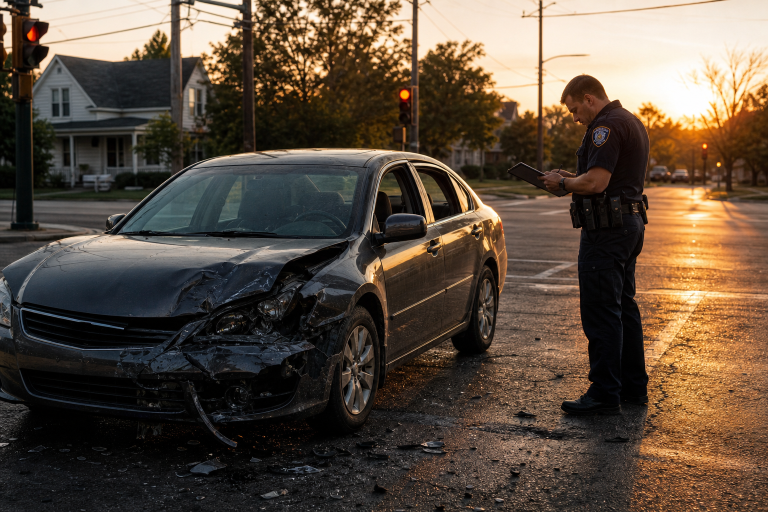
Request a copy of the report as soon as it becomes available and read it line by line. Check basic information first, including names, license plate numbers, insurance details, location, and the number of vehicles involved. Then compare the narrative and diagram against your own photos, notes, and memory.
If you find an error, do not alter the report yourself or assume it will be ignored. Contact the agency that prepared it and ask whether it accepts supplemental statements, amendments, or correction requests. Provide calm, specific information and supporting material. An officer may decline to change an opinion about fault, but factual mistakes, such as a wrong vehicle position or misspelled name, may sometimes be corrected or clarified.
Evidence That Supports Your Claim
A strong claim should not depend on the police report alone. Preserve evidence that explains what occurred and documents the impact on your life. Take wide and close photographs of the scene, road signs, debris, skid marks, traffic lights, vehicle damage, and visible injuries. Save dashcam footage quickly because it may be overwritten.
Modern vehicles may also retain limited crash-related information. Event data recorders can capture technical information from a brief period before, during, and after certain collisions. Whether data exists, what it shows, and how it can be accessed depend on the vehicle and the circumstances, so it should be handled carefully.
Useful Records to Preserve
- Witness contact information and written recollections.
- Photos and videos taken immediately after the collision.
- Towing invoices, repair estimates, and vehicle inspection records.
- Messages with insurers, repair shops, employers, or medical providers.
- Receipts for transportation, prescriptions, and other crash-related expenses.
Medical Care and Injury Documentation
Some injuries are not obvious at the roadside. Adrenaline can temporarily mask neck pain, headaches, dizziness, numbness, back pain, or emotional distress. Seek prompt medical attention when symptoms appear, follow the recommended treatment plan, and tell providers that the symptoms began after the collision.
Medical records help establish when symptoms were reported, what treatment was necessary, and how injuries affected daily activities. Keep visit summaries, test results, prescriptions, referrals, bills, and a short personal journal describing pain levels, missed work, sleep problems, and tasks you could not complete.
Speaking With Insurance Companies
Report the collision to your own insurer as required by your policy, but keep your description factual and limited to what you know. Avoid guessing about speed, blame, injuries, or the other driver’s actions. Record the date, time, claim number, and representative’s name for every call.
Before accepting a settlement, consider whether all injuries have been evaluated and whether future treatment or time away from work remains uncertain. A release may end the right to seek additional payment later, even if symptoms worsen or new expenses arise.
Complicated Accident Claims
Additional review may be helpful when the report conflicts with other evidence, when fault is disputed, when injuries are serious, when multiple vehicles are involved, or when a commercial driver, uninsured motorist, pedestrian, cyclist, or government vehicle is involved in the crash. These cases can involve extra insurance coverage questions, evidence deadlines, and reporting rules.
Final Thoughts
A police report can shape a car accident compensation claim, but it is one piece of a larger evidence picture. Review it promptly, address material inaccuracies, preserve independent proof, and document medical care and expenses. Careful records make it easier to present a clear, consistent account of how the crash happened and how it affected you.